
Walking sticks and canes in Ireland: folding, adjustable, wooden and seat sticks compared, with how to measure, which hand to use and stair tips.
Walking Sticks to Compare
A walking stick is the simplest walking aid: it takes some weight off a painful hip, knee or ankle and gives you an extra point of balance. Getting the height right and holding it in the correct hand matter more than the price.
This guide covers the main types of walking stick and cane, how to measure for one, how to use it on stairs, and the extras that make a stick safer in Irish weather. If you need more support than one stick gives, see our guide to walking aids, which covers quad canes and walking frames.
Walking sticks compared
| Type | Key detail | Price | ||
|---|---|---|---|---|
|
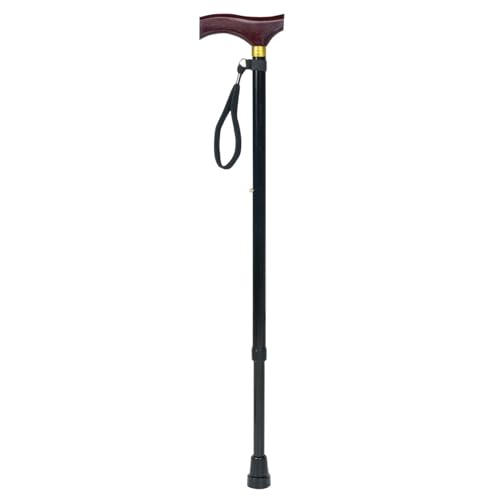
Aidapt adjustable Everyday | Adjustable stick | 74 to 97 cm, 10 settings | €18.99 | View on Amazon |
|
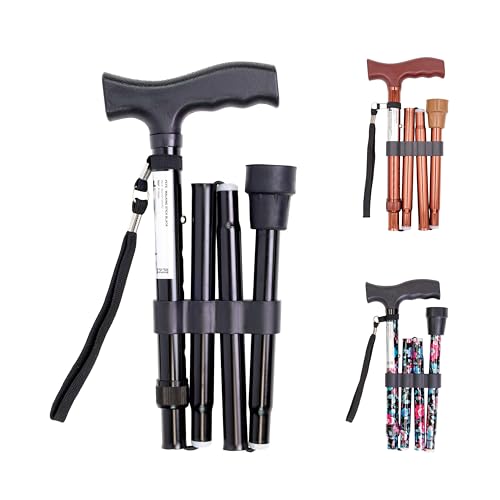
PEPE folding stick Folding | Folding stick | Up to 100 kg, cover | €9.99 | View on Amazon |
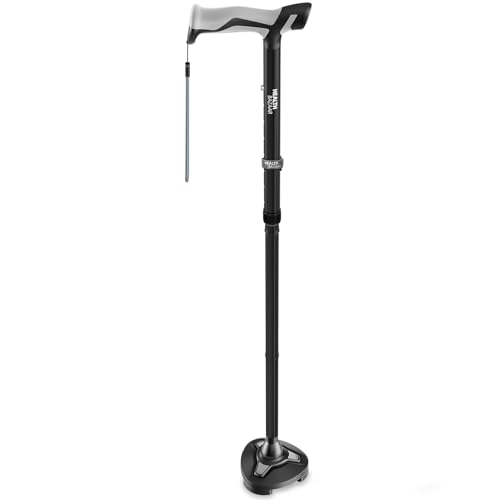
Healthbazaar all-terrain Shock absorbing | Folding stick | For heights 152 to 195 cm | €32.25 | View on Amazon |
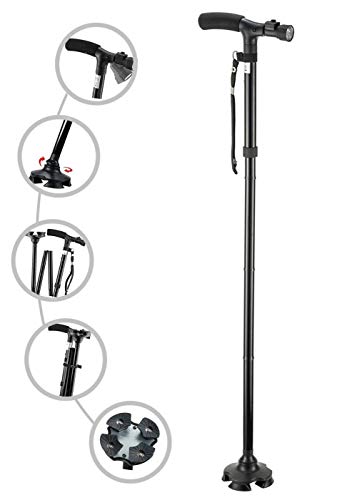
Runzi LED folding cane Self-standing | Folding stick | LED light, pivoting base | €25.02 | View on Amazon |
|
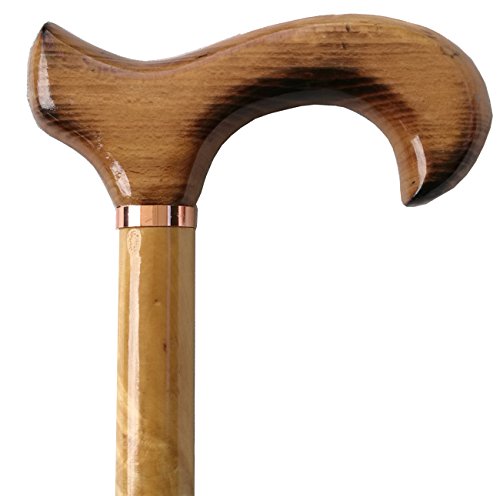
Scorched derby cane Wooden | Wooden cane | 94 cm, 350 g | €28.40 | View on Amazon |
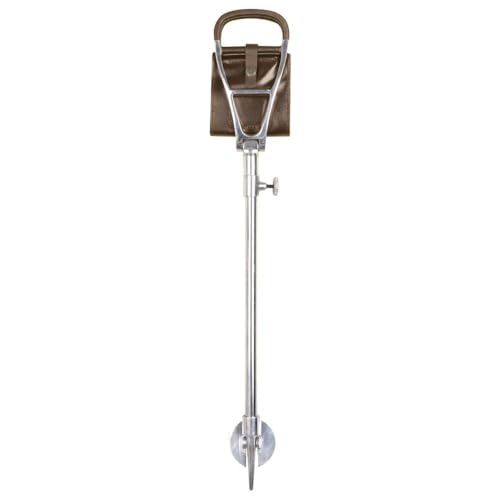
| Seat stick | Seat 55 to 79 cm | €59.78 | View on Amazon | |
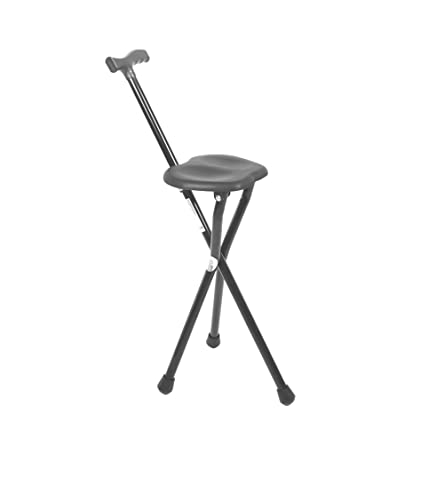
PEPE stick with seat Tripod seat | Seat stick | 3-leg seat, aluminium | €29.99 | View on Amazon |
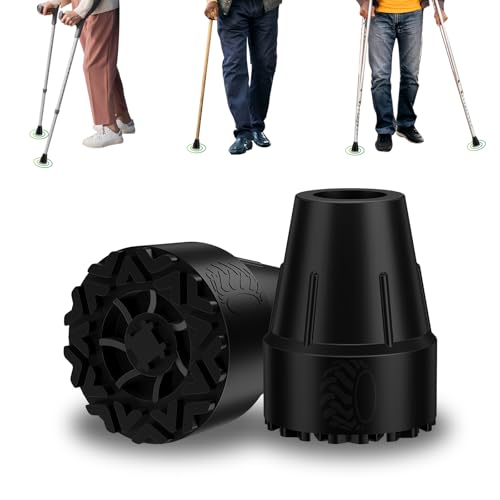
Supregear ferrules (2) Spare tips | Ferrule | 19 mm, heavy duty | €11.99 | View on Amazon |
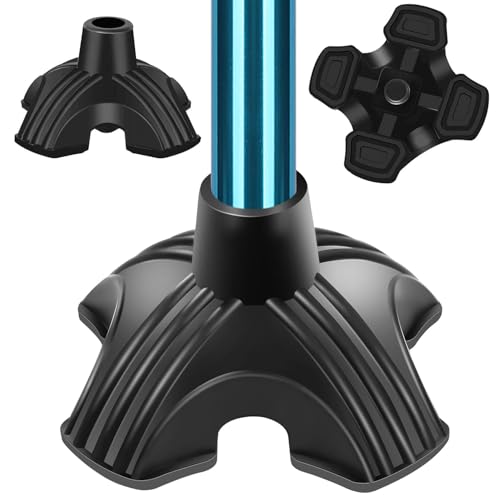
Supregear self-standing tip Stands up | Quad ferrule | 19 mm, four prongs | €16.98 | View on Amazon |
Today’s prices on folding, adjustable, wooden and seat sticks.
Table of Contents
Types of Walking Stick
Adjustable walking sticks
Most modern sticks are aluminium with a push-button height adjuster, so one stick fits a wide range of users and can be changed if you switch shoes. They are light and the best starting point for most people.
Folding walking sticks
Folding sticks break into three or four sections joined by an elastic cord. They fit in a bag or a car glovebox, so they suit people who only need a stick some of the time, on holidays or for longer walks.
Wooden canes
Wooden sticks such as derby and crook canes look traditional and are often lighter than you expect. They are usually a fixed length. A wooden stick that is too long can be cut down by a few centimetres before the ferrule is refitted.
Seat sticks
A seat stick opens out into a small seat, so you can rest in a queue, at a match or on a long walk. Some have a single leg and a leather sling seat, and others a three-legged stool. They are for short rests and are not as steady as a proper walking stick while you walk.
Quad canes and self-standing sticks
A quad cane has a small base with four feet and stands up on its own. It gives more support than a single stick, for people with poor balance or after a stroke. A self-standing ferrule gives a normal stick a small four-prong base so it does not fall over when you let go. Our walking aids guide covers quad canes in more detail.
Choosing a Handle
- Crook handle: the classic curved handle. It hooks over an arm or a chair, but puts more pressure on a small part of the palm.
- Derby handle: a curved handle that fits the hand well and is easy to hang up.
- Offset or T-handle: sits the weight directly over the shaft. Common on adjustable sticks.
- Anatomical or palm grip: shaped to the hand, spreading the load across the palm. Good for arthritis in the hands. Comes in left and right-handed versions.
Measuring for a Walking Stick
Stand up straight in the shoes you usually wear, with your arms hanging loosely by your sides. The top of the handle should be level with the crease of your wrist. When you hold it, your elbow should have a slight bend. A stick that is too long pushes your shoulder up, and one that is too short makes you lean over.
Which Hand Should You Hold a Walking Stick In?
Hold the stick in the hand opposite your weaker or painful leg. If your right knee hurts, use the stick in your left hand. Move the stick forward at the same time as the weak leg, so the stick shares the weight on that step. This feels odd at first but gives a more natural walk and better support.
Using a Walking Stick on Stairs
Hold the stair rail with one hand and the stick in the other.
- Going up: step up with your good leg first, then bring the bad leg and the stick up together.
- Going down: put the stick and the bad leg down onto the step first, then follow with the good leg.
A simple way to remember it is "up with the good, down with the bad". A second banister on the other side of the stairs makes this much safer. See our guide to hand rails for the elderly.
Ferrules, Ice Tips and Safety
The rubber tip, or ferrule, is what stops the stick slipping. Check it often and replace it when the tread is worn smooth or the rubber is cracked. Measure the shaft diameter first: 19 mm is common, but sizes vary. In icy weather, a flip-down ice tip with metal spikes gives grip on frozen footpaths. Use a wrist strap so the stick does not drop when you open a door or reach for something.
Getting a Walking Stick in Ireland
Walking sticks are cheap enough that most people buy their own. If you have a medical card, a physiotherapist can assess you and the HSE may supply a stick, a quad cane or a frame free of charge. See our guide to mobility aids grants in Ireland for how the HSE aids and appliances scheme works.
When a stick is no longer enough, a rollator or a walking frame gives support on both sides.
Every walking stick and accessory we list, with today’s prices.
Walking Stick Questions
Which hand should I use a walking stick in?
Use it in the hand opposite your weaker or painful leg, and move it forward at the same time as that leg. If your left hip is sore, hold the stick in your right hand.
How do I know what height my walking stick should be?
Stand straight in your usual shoes with your arms by your sides. The top of the handle should line up with the crease of your wrist, and your elbow should bend slightly when you hold it.
Can I sit on a walking stick with a seat?
Yes, for short rests. Seat sticks are designed for sitting in queues or on walks, but they are less steady than a chair. Check the maximum user weight and set it on firm ground.
Is a walking cane the same as a walking stick?
Yes. “Cane” is more common in American English and “walking stick” in Ireland and the UK, but they mean the same thing.
How often should I replace the rubber tip?
Whenever the tread is worn smooth, the rubber is cracked, or the metal shaft starts to show through. For daily use outdoors, that can be every few months.