
Find the right Bed Rail for the Elderly, Adults & Disabled in Ireland. Compare bed rails, bed guards and support rails, with advice on safety and fitting.

Bed Rails
A bed rail can be useful for someone who is at risk of rolling towards the edge of the mattress or who needs additional support while moving in bed. However, choosing one is not simply a matter of finding the strongest-looking rail and fitting it to the bed.
The first thing to establish is what the person actually needs help with. A rail intended to reduce the chance of rolling from the bed is not necessarily the right product for someone who struggles to sit up or get their legs over the side of the mattress. In that situation, a bed lever or assist rail may be more appropriate.
The bed itself is equally important. A rail that works on a conventional fixed bed may not be suitable for a divan, a particularly deep mattress or an electric adjustable bed. The mattress thickness, fixing method, rail height and available space all need to be considered before buying.
There is also an important safety issue. The Health Service Executive does not regard bed rails as a universal accessory for older people. Its guidance is concerned with preventing a person from slipping, sliding, falling or rolling from the bed, rather than restraining someone or helping them pull themselves out of bed.
So the useful question is not simply “What is the best bed rail for an elderly person?” It is what problem are you trying to solve, and is a bed rail actually the right solution?
This guide looks at the main types of bed rail, the differences between safety rails and assist rails, the types of beds they can be used with, what to look for when buying in Ireland and the safety checks that should be made before and after fitting.
Table of Contents
What Is a Bed Rail?
A bed rail is a support or barrier positioned alongside a mattress. Depending on its design, it may provide protection at the side of the bed, help a person maintain their position or provide a point of support while moving around the mattress.
The term covers several different types of equipment. A short assist rail can be little more than a sturdy handhold beside the upper part of the mattress, while a longer bed guard can extend along a substantial section of the bed.
Products may also be described as bed side rails, bed guards, safety rails, support rails, assist rails or bed mobility rails. The terminology can be inconsistent, so the manufacturer’s description and fitting instructions are more useful than the product name alone.
The most important distinction is between a safety rail and an assist rail or bed lever. They may look similar, but they can have quite different purposes.
Bed Rail or Bed Lever?
This is one of the first things to establish before buying. A safety rail is generally intended to provide a barrier alongside the mattress and, where appropriate, reduce the risk of a person rolling or falling from the bed. A bed lever or assist rail is intended to provide support during movement.
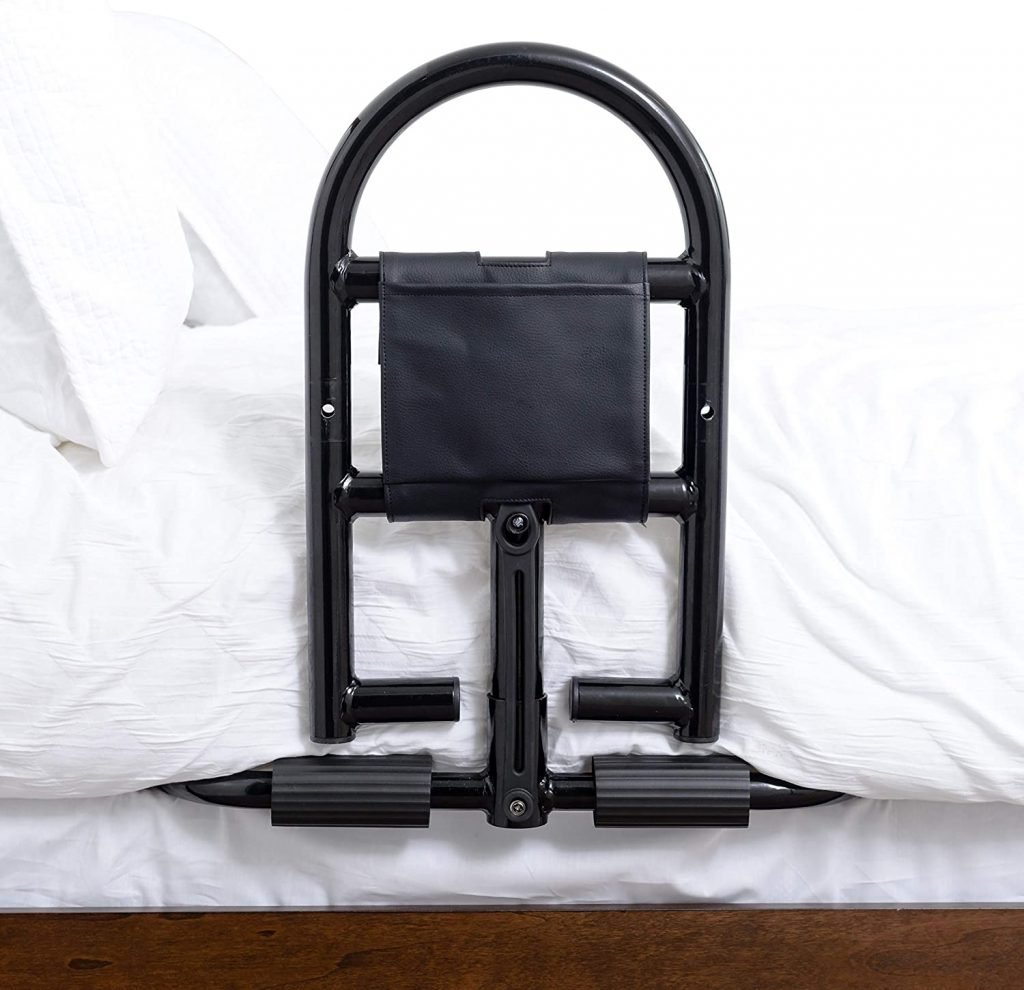
The HSE specifically states that bed rails are not designed to be used as grab rails for getting into or out of bed. If someone needs to pull themselves from lying to sitting, turn in bed or use a firm handhold during a transfer, equipment designed for that purpose should be considered instead.
Think about the movement that is actually causing the difficulty:
- Rolling towards the edge while asleep: a suitable safety rail may be considered.
- Difficulty turning or repositioning: an appropriate support aid may be more useful.
- Difficulty sitting up: a bed lever or purpose-designed assist rail may be more appropriate.
- Difficulty getting out of bed: look at transfer support rather than assuming a conventional bed guard is suitable.
This distinction is important because a sturdy-looking rail is not automatically designed to withstand repeated pulling or sideways force. Always check what the manufacturer says the product is intended to do.
Do Older People Need Bed Rails?
Age alone is not a reason to fit a bed rail.
Some older people remain completely independent in bed and have no need for one. Others may have reduced mobility, a tendency to roll towards the edge of the mattress or difficulty maintaining their position and may benefit from additional equipment.
The person’s abilities matter just as much as the bed. Someone who understands the purpose of a rail and can use the bed safely is in a very different situation from someone who is confused at night, may try to climb over the rail or cannot safely manage the space around it.
The HSE’s assessment guidance considers factors including previous falls, mobility, sensory impairment, cognition, the possibility of climbing over the rail and entrapment. Pressure-relieving mattresses and other equipment around the bed can also affect the assessment.
This does not mean that a person with one of these characteristics can never use a bed rail. It means the decision should be based on the individual circumstances rather than simply installing one because someone is elderly or has difficulty walking.
The Main Types of Bed Rail
Bed rails vary considerably in size and design. The right type depends on what the rail is supposed to achieve, how the person uses the bed and how the equipment can be secured.
Half-Length Bed Rails
A half-length rail covers part of the side of the mattress rather than extending towards the foot of the bed. It can provide some side protection while leaving more of the bed open for access.
This can be useful where the person needs a barrier beside the upper or middle part of the mattress but still needs an unobstructed route out of bed. It is not automatically safer than a longer rail, however. The position and purpose need to match the person’s needs.
Full-Length Bed Rails
A full-length rail provides more extensive coverage along the side of the mattress. That may be appropriate where a longer section of the bed needs protection, but it can also interfere with normal access.
If the person normally gets out from the side covered by the rail, a fixed full-length design may create a new problem. Some models fold or drop down, but the release mechanism needs to be simple enough for the person or carer to operate safely.
Adjustable Bed Rails
Adjustable rails allow the height, length or position to be altered within the range provided by the manufacturer. This can be useful when mattress thickness or the user’s position means that a fixed-size rail is not suitable.
Customer reviews can be useful when comparing these products because they reveal practical details that photographs do not show. Reviews of adjustable rails available in Ireland mention features such as sturdy construction, padded grips, relatively straightforward assembly and the ability to alter the rail’s position. Other users mention that some release mechanisms take a little practice to operate.
These experiences are useful for comparing convenience and day-to-day operation, but they do not establish whether a particular rail is appropriate for a particular person.
Folding and Drop-Down Rails
Folding and drop-down designs are intended to make access easier when the person needs to get out of bed or when a carer needs access to the mattress.
The important point is not simply whether the rail folds, but whether it locks securely when raised and whether the release mechanism can be operated safely. A complicated mechanism may be unsuitable for someone who has poor dexterity, limited strength or difficulty understanding how it works.
Bed Assist Rails
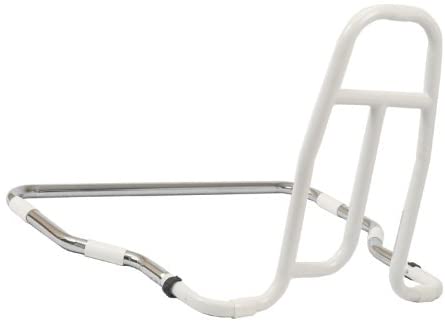
Assist rails are generally more compact and are designed around movement rather than providing a long barrier. They can provide a handhold for someone who needs help moving from lying to sitting or stabilising themselves beside the mattress.
Some have padded or non-slip grips. Those features can make the rail more comfortable to use, but a padded handle does not change the intended purpose of the product. Check the manufacturer’s instructions before relying on any rail for body weight or transfer support.
Choosing a Rail for the Bed You Actually Have
Once you have established the purpose of the equipment, the next step is to look at the bed. This is where many otherwise sensible purchases go wrong.
Do not choose solely by the words “single”, “double” or “king”. Two beds with the same mattress size can have completely different bases, frames and fitting requirements.
Measure the Mattress
Mattress thickness is one of the most important measurements to check. A rail that provides plenty of coverage beside a relatively thin mattress can sit much lower when used with a deeper mattress.
Include any mattress topper, pressure-relieving overlay or other layer that will remain on the bed. Use the manufacturer’s stated mattress range rather than assuming that a rail will fit because its dimensions look suitable in a photograph.
Check the Bed Base and Fixing Method
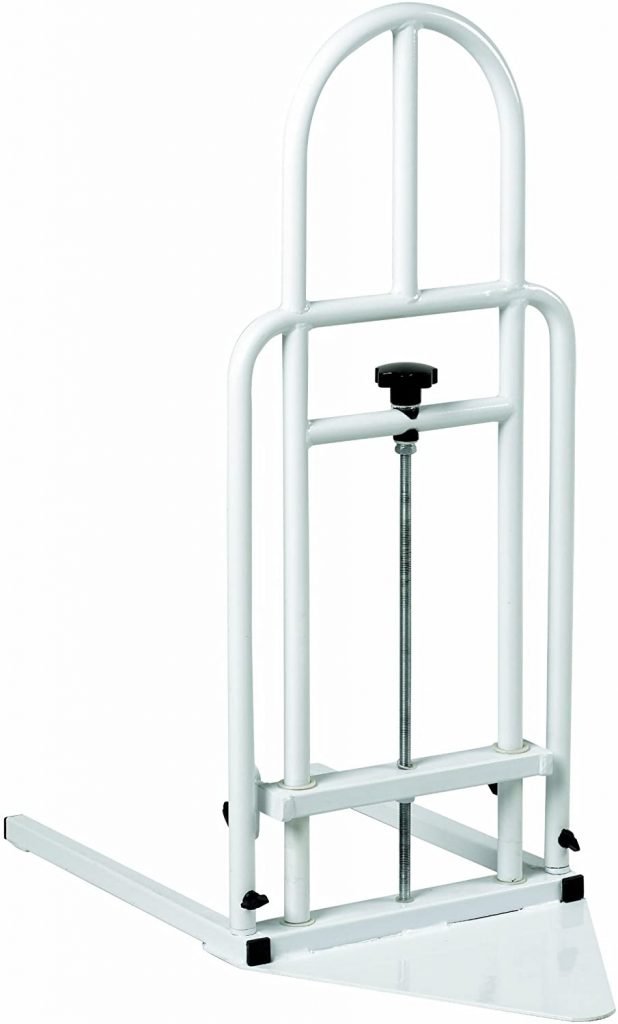
Some rails use a support structure beneath the mattress, sometimes with an additional strap. Others attach to the bed frame or are designed as part of a specialist bed system.
Divan beds, slatted frames and unusual bed constructions can present different fitting requirements. If the rail requires space beneath the mattress, make sure that space actually exists and that the support structure can be positioned as instructed.
Do not modify the rail or bed to make an incompatible product fit. If the manufacturer’s instructions do not clearly cover the bed you have, ask the supplier or manufacturer before using it.
Think About the Person’s Exit From the Bed
Look at how the person normally gets out of bed. A rail positioned across their usual exit point may make the transfer harder, particularly if they need to move their legs over the side before standing.
With a double bed, consider the other occupant as well. A rail may be useful for one person but restrict the other’s access or make it harder for a carer to reach the bed.
Bed Rails for Double and Divan Beds
Some bed rails are designed for double beds, but “double” does not tell you enough about whether a particular product will fit.
Check the mattress thickness, base construction, frame, available space underneath the mattress and the manufacturer’s fitting requirements. An under-mattress rail may work perfectly well on one double bed and be unsuitable for another.
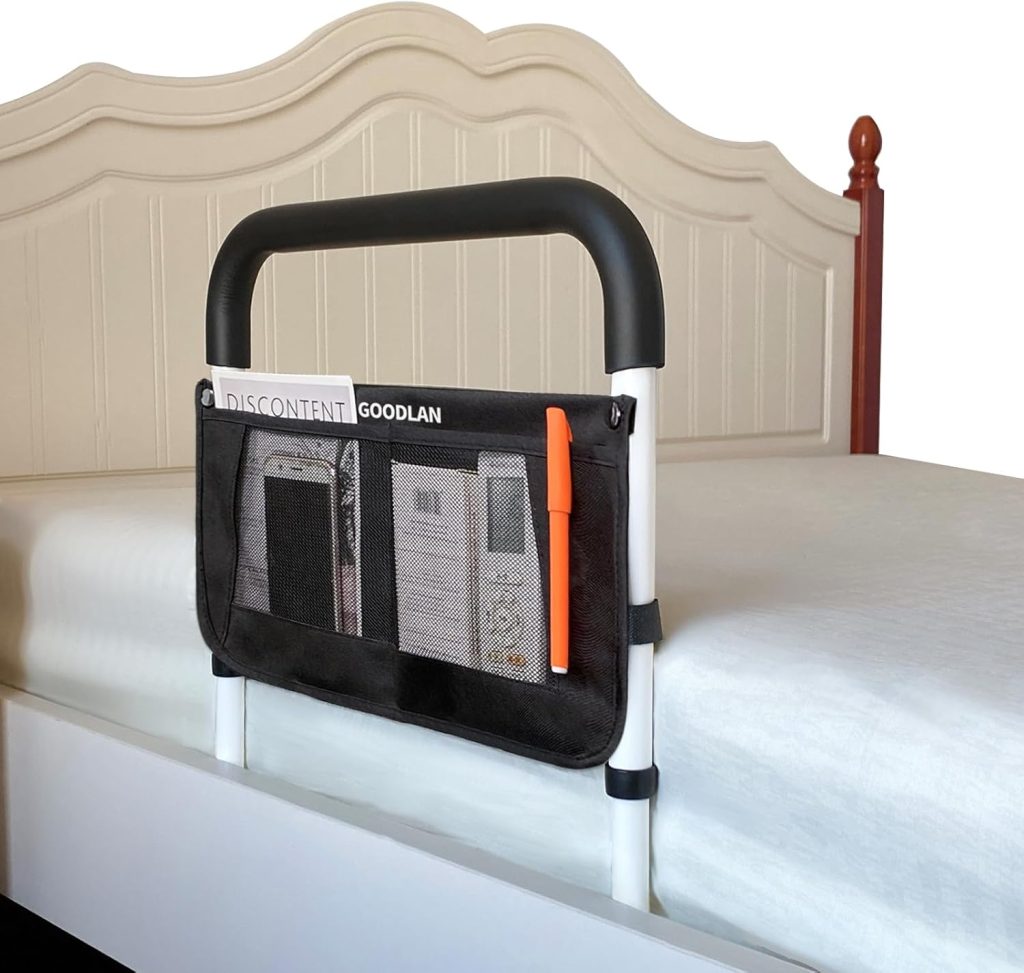
Divan beds deserve particular attention because the construction can leave less accessible space beneath the mattress. Do not force a support frame into a gap where it does not naturally fit.
If two people share the bed, there is also no automatic reason to install rails on both sides. The number and position of rails should reflect the actual need and should not unnecessarily restrict access.
Bed Rails
Adjustable and Electric Beds Need Extra Care
An electric adjustable bed is a different proposition from a conventional fixed bed. When the head or leg sections move, the mattress and supporting structure change position.
A rail that is secure on a flat conventional bed may interfere with the moving sections of an adjustable base or end up in the wrong position when the bed is raised.
Only use a rail where compatibility with the particular bed has been established. A generic statement that a product is “suitable for adjustable beds” is not necessarily enough if the manufacturer does not cover your exact bed arrangement.
Before relying on a rail with an electric bed, check what happens when the bed moves through its normal range:
- Does the rail move correctly with the mattress?
- Does it remain securely positioned when the head section rises?
- Does any part of the rail or its support structure interfere with the moving base?
- Does it obstruct the person’s normal sitting or transfer position?
- Can the person still get into and out of bed safely?
- Does the manufacturer specifically approve the rail for this type of adjustable bed?
If compatibility is unclear, contact the supplier or manufacturer rather than improvising a fixing method.
Hospital and Profiling Beds
Profiling beds are particularly important because the backrest and leg sections can move independently. The rail therefore needs to be compatible with the particular bed system rather than simply being physically capable of attaching to it.
The HSE’s current guidance does not treat side rails as an automatic part of a profiling bed. A risk assessment should establish whether rails are actually required and whether they can be used safely with the person, mattress and bed arrangement.
This is an important distinction from simply buying a rail for an ordinary domestic bed. If a profiling bed is already being used as part of a person’s care, professional advice is sensible where there is any uncertainty about rail selection or fitting.
Are Bed Rails Safe for Older People?
A bed rail can be useful, but it should not be treated as a simple piece of furniture that is automatically safe for anyone who wants one. The benefit needs to be weighed against the risks for the particular person and bed.
The HSE guidance highlights several issues that should be considered before a bed rail is used. These include the person’s mobility, cognition, ability to understand and use the equipment, the possibility of climbing over the rail and the risk of becoming trapped between the rail, mattress and bed.
This is particularly relevant if someone becomes confused or agitated at night. A person who would normally use a rail safely may behave differently when disorientated or trying to get out of bed. A rail can then become something they attempt to climb over rather than a useful barrier.
Visual impairment, involuntary movements and some types of mobility difficulty can also affect whether a particular design is appropriate. The HSE assessment material specifically identifies these factors when considering the use of bed rails.
The risk of entrapment
Entrapment is one of the most important safety issues to understand. Gaps can occur between the rail and mattress, between parts of the rail itself or between the mattress and another part of the bed. The person’s size, movement and the type of mattress can all affect the risk.
A rail that appears secure when fitted to an empty bed is not necessarily safe for every person who uses it. The position of the mattress and rail needs to be considered with the person actually using the bed in mind.
This is one reason not to improvise with cushions, additional padding or homemade modifications in an attempt to close a gap. If a product does not provide the required fit according to its instructions, a different product or professional assessment may be needed.
When a bed rail may not be suitable
A rail deserves particular caution where the person is likely to climb over it, repeatedly becomes trapped against it, cannot understand its purpose or is unable to use the bed safely with the rail in position.
The same applies if the real problem is getting out of bed and the rail is being considered simply because it provides something to pull against. In that situation, a purpose-designed bed lever or assist rail may be more appropriate.
If there is significant uncertainty, especially where the person has complex mobility or cognitive difficulties, an occupational therapist, physiotherapist, nurse or other appropriate healthcare professional can assess the situation and advise on suitable equipment.
How High Should a Bed Rail Be?
There is no single ideal height for every bed rail. The useful height depends on the mattress, the rail design and the person using the bed.
A rail can look tall when viewed on its own but provide considerably less protection once a deep mattress and topper are added. For this reason, compare the manufacturer’s stated rail height with the mattress depth rather than choosing a product simply because it is described as “extra tall”.
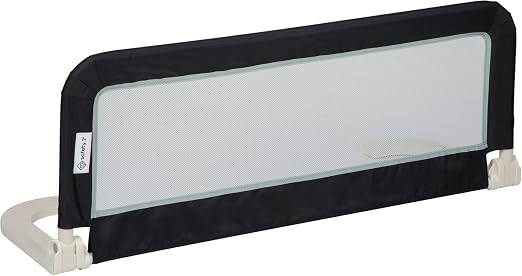
The HSE guidance for profiling beds specifically considers rail height in relation to mattress depth and the user’s girth. This illustrates why measurements need to be considered as a combination rather than in isolation.
Can a Bed Rail Prevent Someone Falling Out of Bed?
A suitable and correctly fitted rail can help reduce the risk of someone slipping, sliding, rolling or falling from the side of the bed. It cannot guarantee that a fall will never happen.
In some circumstances, adding a rail can introduce a different risk. Someone may attempt to climb over it, particularly if they are confused or trying to get out of bed, or they may become trapped between the rail and mattress.
That means a rail should be considered as part of the wider situation rather than as a complete falls-prevention solution. If someone is falling from bed regularly, it is worth looking at why the falls are happening and whether changes to the bed, room layout, mattress or care arrangements are also required.
Using a Bed Rail to Get Out of Bed
This is where the difference between a bed rail and a bed assist rail becomes particularly important.
The HSE advises that safety bed rails are not designed to be used as grab rails for getting into or out of bed. Repeatedly pulling against a rail that was not designed for that purpose can place force on its fixing system and may cause it to loosen or deteriorate.
If the person needs a handhold to help them sit up, turn or transfer from the bed, look specifically for a product designed for that type of movement. Check its weight capacity, fixing method and instructions rather than assuming that any rail capable of supporting a mattress is suitable for supporting a person’s body weight.
Bed Rails and Dementia
Dementia does not automatically mean that a bed rail cannot be used, but it does make individual assessment particularly important.
The key question is how the individual behaves around the bed. Someone who understands the purpose of the rail and uses it appropriately may be very different from someone who becomes confused at night, tries to climb over the rail or does not recognise the potential danger.
The HSE assessment material identifies confusion, agitation, delirium and dementia among the factors that can affect the suitability of bed rails. If a person has already attempted to climb over a rail, continuing to use the same arrangement without reassessment could create a greater risk.
Where there is uncertainty, professional assessment is preferable to choosing a taller or stronger rail and assuming that will solve the problem.
Fitting a Bed Rail
Even a well-designed rail can become unsafe if it is incorrectly fitted. Follow the manufacturer’s instructions rather than relying on the product looking secure once it has been placed beside the mattress.
Before fitting, check that the bed and mattress fall within the manufacturer’s stated requirements. Make sure the mattress is at the correct thickness and that any topper or overlay that will remain in use has been included when measuring.
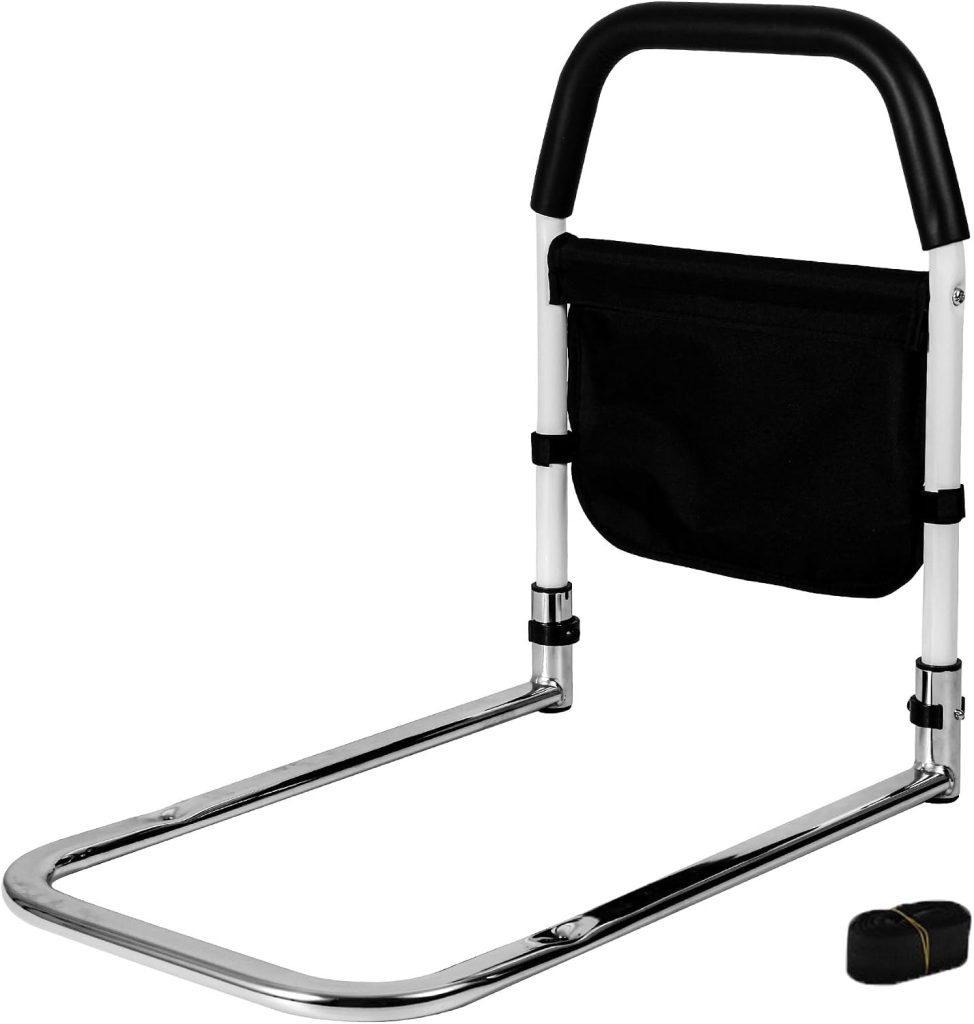
Where the rail uses an under-mattress support frame, position it exactly as instructed. Do not assume that a tight fit is necessarily a secure fit, and do not remove or alter components simply because doing so makes installation easier.
Check the rail after fitting
- Make sure all fixing points are secure.
- Check that the rail is positioned at the height and location specified by the manufacturer.
- Check for unwanted gaps between the rail and mattress.
- Make sure folding or drop-down mechanisms lock correctly.
- Check that the rail does not interfere with normal access to the bed.
- On an adjustable bed, operate the bed through its normal positions and check that the rail remains compatible.
It is also worth checking the rail again after it has been in use. Bedding can move, fixings can loosen and the mattress arrangement can change. If the mattress is replaced or a thick topper is added, the original setup should be checked again rather than assuming that the rail will still provide the same clearance and coverage.
What Do Real Customers Say About Bed Rails?
Customer reviews can be particularly useful with bed rails because some of the most important practical differences are difficult to judge from photographs.
Reviews of adjustable and assist rails commonly focus on issues such as assembly, stability, padding, the ease of adjusting the rail and how simple the release mechanism is to operate. Some customers value a sturdy feel and straightforward installation, while others find that certain folding mechanisms require a little practice.
These comments are worth considering because a product can meet its published dimensions yet still be awkward for a particular person to use every day.
There is an important limitation, however. A positive customer review cannot establish that a rail is clinically suitable for another person. Reviews tell you about someone’s experience with assembly, comfort or day-to-day use. They do not replace the manufacturer’s compatibility information or an individual safety assessment where one is needed.
Common Bed Rail Buying Mistakes
Most problems can be avoided by dealing with a few basic questions before ordering.
- Choosing by appearance: a substantial-looking rail is not necessarily the right rail for the bed or user.
- Ignoring mattress depth: the rail needs to be suitable for the actual mattress and any permanent topper or overlay.
- Assuming all double beds are the same: bed bases and fixing arrangements vary.
- Using a safety rail as a grab rail: use equipment designed for transfers if the person needs to pull themselves up or out of bed.
- Buying a generic rail for an adjustable bed: confirm compatibility with the particular bed arrangement.
- Overlooking how the person gets out of bed: the rail should not create an unnecessary obstacle at the person’s normal exit point.
- Adding homemade modifications: do not alter the rail or improvise padding or fixings to overcome a compatibility problem.
Bed Rail Buying Checklist
Before ordering a bed rail, check these points:
- What problem is the rail intended to solve?
- Does the person need a safety rail or an assist rail?
- What type of bed is it?
- What is the actual mattress thickness?
- Is there a mattress topper, overlay or pressure-relieving mattress?
- How does the rail attach to the bed?
- Is the rail compatible with the particular bed?
- Can the person get into and out of bed safely with it fitted?
- Could the person climb over it or become trapped?
- If it is an adjustable or profiling bed, has compatibility been confirmed?
- If the person’s needs are complex, has professional advice been obtained?
Taking these measurements and questions seriously is more useful than choosing a product simply because it has the highest number of positive reviews or the largest advertised rail height.
When a Different Aid May Be Better
A bed rail is not the only way to make getting in and out of bed easier.
If the main difficulty is sitting up, turning or transferring from the mattress, a bed lever or assist rail may be more appropriate than a longer safety rail. If the main concern is repeated falling from the bed, the cause of the falls should also be considered rather than relying on a rail alone.
Depending on the person’s circumstances, other changes may include altering the bed height, improving lighting around the bed, moving obstacles away from the normal transfer route or reviewing the mattress and wider sleeping environment.
For someone with significant mobility difficulties or a history of falls, professional assessment can help identify whether a bed rail, bed lever or another form of support is the most suitable option.
Buying Bed Rails in Ireland
If you are buying a bed rail in Ireland, start by identifying the product type and checking compatibility rather than shopping by price alone.
Irish mobility suppliers stock a range of bed rails, bed guards and assist rails, but the same basic checks apply whether you are buying online or from a local supplier. Have the mattress measurements and details of the bed available before ordering. If you are unsure whether a particular model will fit, ask the supplier before purchasing.
For an adjustable or profiling bed, provide the supplier with the bed model or exact details of the base where possible. This is much more useful than simply saying that you have an “electric bed”.
It is also worth checking the returns policy before ordering online, particularly if compatibility is not completely clear. A rail that cannot be fitted safely is not a bargain simply because it was inexpensive.
Bed Rails
Bed Rails FAQ
What is the best bed rail for an elderly person?
There is no single best bed rail for every older person. The right choice depends on whether the aim is to provide side protection, support movement or help with transfers, as well as the type of bed and mattress.
Can bed rails be used on adjustable beds?
Some can, but only use a rail where compatibility with the particular adjustable bed has been established. The moving sections of an electric bed can affect how a rail sits and operates.
Can you use a bed rail on a double bed?
Some bed rails are suitable for double beds, but the bed size alone is not enough to establish compatibility. Check the base construction, mattress thickness and the manufacturer’s fitting requirements.
Can someone use a bed rail to pull themselves out of bed?
A safety bed rail should not automatically be used as a grab rail. If someone needs to pull themselves into a sitting or standing position, use equipment specifically designed for that purpose and check its weight capacity and fixing method.
Are bed rails safe for people with dementia?
They require individual assessment. Confusion, agitation and a tendency to climb over the rail can increase the risk, so a rail should not be fitted simply because someone has difficulty staying in bed.
How thick can a mattress be for a bed rail?
It depends on the particular rail. Check the manufacturer’s stated mattress range and include any topper or overlay that will remain on the bed.
Finally…
A bed rail can be a useful piece of equipment, but the best choice is not necessarily the longest, tallest or most expensive model.
Start with the person’s actual difficulty, then consider the bed, mattress, fixing method and way the person gets in and out of bed. Safety needs to be considered alongside convenience, particularly where there is a risk of climbing, confusion or entrapment.
For straightforward situations, careful measurement and following the manufacturer’s instructions may be enough to choose a suitable product. Where the person’s needs are more complicated, particularly with profiling beds, significant mobility problems or cognitive difficulties, professional assessment is the safer route.
The aim is not simply to put a rail beside the mattress. It is to choose equipment that fits the bed, serves the intended purpose and allows the person to use their bed as safely and independently as possible.