
Transfer boards in Ireland for bed, wheelchair, toilet and car transfers: straight and banana boards, turntables and belts compared, with safety tips.
Transfer Boards to Compare
Today’s prices on transfer boards, turntables, belts and slide sheets.
A transfer board, also called a slide board or sliding board, bridges the gap between two seats so you can slide across instead of standing up. It is one of the most useful aids for wheelchair users and for anyone who cannot safely stand and turn, and it takes much of the strain off carers.
This guide covers the types of transfer board and other transfer aids, who they suit, and how to use one safely for bed, wheelchair, toilet and car transfers.
Transfer aids compared
| Type | Key detail | Price | ||
|---|---|---|---|---|
|
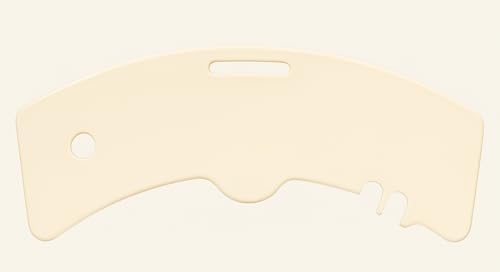
Aidapt banana board Wheelchairs | Curved board | Cut-outs for wheels | €35.21 | View on Amazon |
|
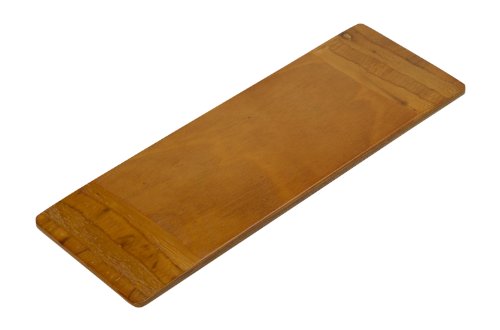
Homecraft short board All-round | Straight board | 60 x 21 cm, 190 kg | €50.87 | View on Amazon |
|
King Mills plus size Larger users | Straight board | Extra wide pinewood | €78.52 | View on Amazon |
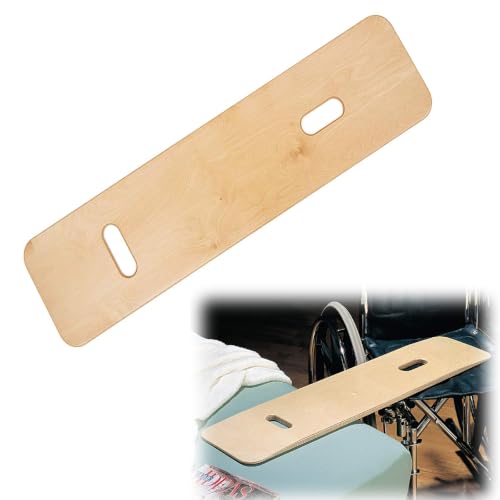
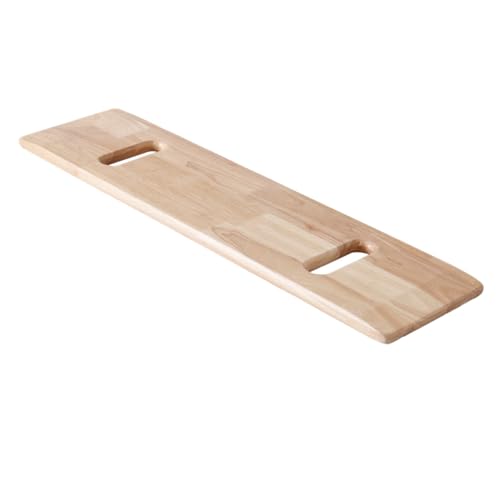
Pinewood 60 x 20 cm board Budget | Straight board | Handholds at each end | €22.09 | View on Amazon |
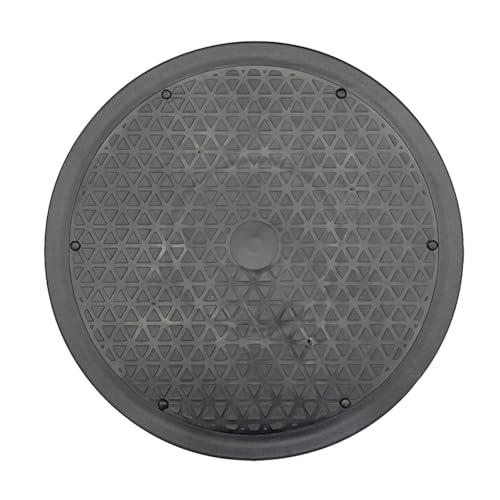
Floor turntable Pivot turns | Turntable | 360° rotation | €17.50 | View on Amazon |
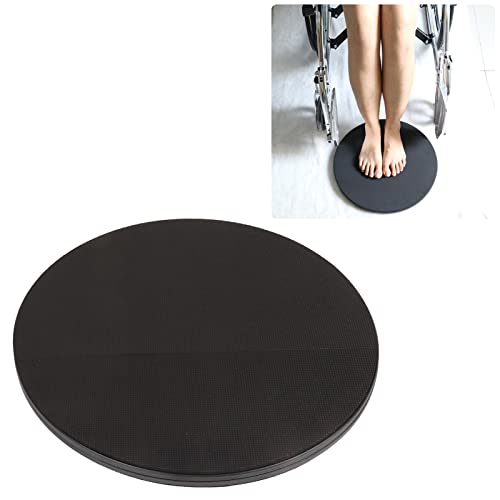
Topyond standing turntable Stand and turn | Turntable with frame | Non-slip platform | €49.00 | View on Amazon |
|
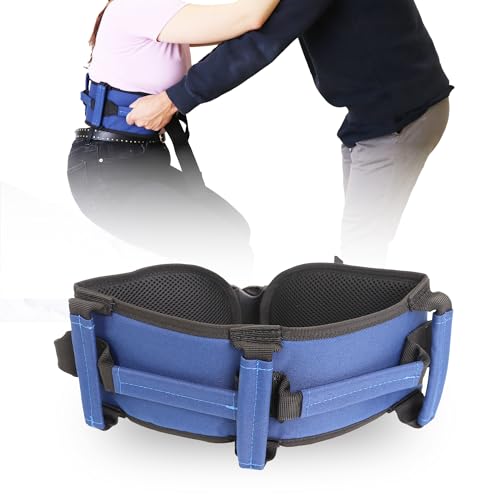
PEPE transfer belt Carers | Transfer belt | 7 handles | €26.10 | View on Amazon |
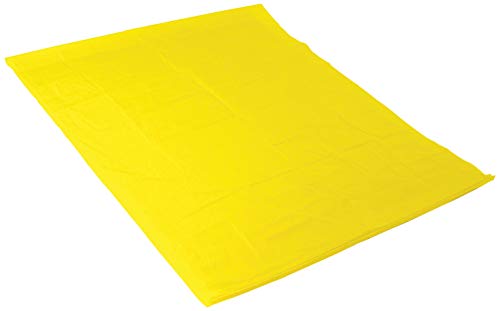
Aidapt slide sheet In bed | Slide sheet | Tubular, low friction | €21.70 | View on Amazon |
Table of Contents
What Is a Transfer Board?
A transfer board is a smooth, rigid board, usually 60 to 80 cm long, that you place under one thigh and across to the next seat. You then slide along it in a few small movements, keeping your weight on your bottom rather than your legs. Boards are made from varnished plywood, pine or smooth plastic, and most have handholds cut into the ends for lifting and positioning.
Transfer boards are used for:
- Bed to wheelchair and back, the most common use.
- Wheelchair to car seat, where the gap and the height difference are often larger.
- Wheelchair to toilet, commode or a shower chair.
- Chair to chair, such as from a wheelchair to an armchair.
Types of Transfer Board and Transfer Aid
Straight boards are the standard type. A short board of about 60 cm is easier to carry and use in a car. A longer board bridges bigger gaps but is heavier.
Banana or curved boards have a curve and cut-outs that fit around the wheelchair wheel, so you can get the chair closer to the bed or car seat. They are often the easiest board for wheelchair transfers.
Boards with a sliding seat have a disc or seat that runs along a track, so the user sits still while the seat slides. They reduce friction on the skin and suit people who struggle to shuffle.
Turntables are rotating discs. A floor turntable helps someone who can stand to pivot their feet when turning from one seat to another. A standing turntable adds a frame to hold, and needs a carer.
Transfer belts go around the user's waist and give a carer secure handholds, so the carer does not pull on arms or clothes.
Slide sheets are low-friction sheets used to move someone up or across a bed. They are a different job from a transfer board but are often used alongside one.
Who Should Use a Transfer Board?
A transfer board suits people who can sit up with good balance and have enough strength in their arms and upper body to shift their weight, but who cannot safely stand to transfer. It is widely used by people with spinal cord injuries, after an amputation, after a stroke, and by older people who are weak in the legs.
It is not the right aid for someone who cannot sit upright without support or cannot help with the move at all. A hoist is safer in that case. An occupational therapist can assess which method is safest and teach both the user and the carer.
How to Use a Transfer Board Safely
- Line up the seats. Put the wheelchair at a slight angle to the bed or seat, as close as possible. Both surfaces should be at about the same height. Sliding slightly downhill is easier.
- Lock the brakes on the wheelchair, and on the bed if it has them.
- Clear the side. Remove or lift the armrest on the side you are moving towards, and swing the footrests out of the way.
- Place the board. Lean away from the gap, slide the board well under the thigh nearest the other seat, and rest the other end firmly on the far seat.
- Hand position. Put your hands flat on the board or the seat, never curled around the edge of the board, where fingers can be trapped.
- Slide in small moves. Lean forward slightly and move across in short shuffles, keeping your feet on the floor where possible.
- Remove the board once you are fully on the new seat, then sort out your position.
Never sit on the bare board edge when the board is not supported at both ends, and check the board for cracks or splinters before each use.
Transfer Boards for Car Transfers
Getting from a wheelchair into a car is often the hardest transfer, because the car seat is usually higher or lower than the wheelchair and the door frame gets in the way. A short or banana-shaped board helps bridge the gap. Push the car seat right back, recline it slightly, and use the board from the wheelchair to the seat with the brakes locked.
For other aids that make car transfers easier, such as swivel cushions and transfer handles, see our car mobility aids guide.
Choosing a Transfer Board
- Length. About 60 cm for cars and short gaps. Up to 80 cm for bigger gaps between bed and chair.
- Width and weight limit. Wider boards feel more secure and suit larger users. Check the maximum user weight.
- Surface. A smooth, varnished or plastic surface slides best. A non-slip underside stops the board moving.
- Handholds. Cut-out grips make it easier to position the board and to carry it.
If you have a medical card, an occupational therapist may be able to supply a transfer board through HSE aids and appliances after an assessment. See our guide to mobility aids grants in Ireland.
Every transfer board, turntable and belt we list, with today’s prices.
Transfer Board Questions
What is a banana board?
A banana board is a curved transfer board with a cut-out that fits around the wheelchair wheel. It lets you get the chair closer to the bed or car seat, which makes the slide shorter.
Can I use a transfer board on my own?
Many people do once they have been shown how by an occupational therapist or physiotherapist. You need good sitting balance and enough arm strength to shift your weight. A carer should help until you are confident.
How long should a transfer board be?
About 60 cm suits car transfers and short gaps. Longer boards of up to 80 cm bridge wider gaps between a bed and a chair but are heavier to carry.
Is a transfer board the same as a slide sheet?
No. A transfer board is rigid and bridges two seats. A slide sheet is a low-friction fabric sheet used to move someone up or across a bed.